A garage door spring broken can make the door heavy, crooked, or stuck. Common signs include a loud snap, a gap in the spring, loose cables, or an opener that runs without lifting the door. Stop using the door, keep people away, and arrange a trained inspection before more damage occurs.
A sudden spring failure can be stressful, especially when a car is inside or the home cannot be secured. The warning signs are often clear. This guide helps homeowners, business owners, and property owners spot the problem without touching dangerous spring parts.
Middletown Garage Door Repair helps property owners understand when a garage door needs quick attention. Spring work is not a safe do-it-yourself task, but knowing the signs can help people make a safer choice.
Table of Contents
- How can you tell if a garage door spring is broken?
- What does a broken garage door spring look like?
- What types of springs do garage doors use?
- Can you open a garage door with a broken spring?
- Why should you avoid repairing a broken garage door spring yourself?
- How long do garage door springs usually last?
- Why are garage door springs replaced in pairs?
- Frequently Asked Questions
- Key takeaways
- Conclusion
How can you tell if a garage door spring is broken?
A broken spring often makes the door hard to lift or leaves it on the floor. The main signs are a loud bang, a visible gap, a loose cable, or an opener that runs without lifting the door. The door may also look uneven when someone tries to move it.
Common signs you can see or hear
A spring may break while the garage door is closed. Many people hear a sharp snap or bang. Others notice the problem later, when the opener hums but the door stays still.
Look for these signs:
- A visible gap in a torsion spring coil
- A spring that hangs loose or looks separated
- A door that feels much heavier than normal
- A door that rises only a few inches
- Loose lift cables near the door sides
- A crooked door that sits higher on one side
- An opener that runs but cannot lift the door
Do not pull the emergency release just to test the door. A failed spring can leave the door too heavy to control by hand. Keep children, pets, visitors, and workers away from the door until it is checked.
Why the door may suddenly become difficult to move
Garage door springs carry much of the door's weight. When one fails, the opener may not have enough power to lift the door. The opener may strain or stop if someone keeps pressing the remote.
A broken spring is not the only possible cause. A damaged cable, blocked track, failed opener, or off-track door can cause similar signs. A trained inspection can find the real problem without putting people or the door at risk.
What does a broken garage door spring look like?
A broken spring may show a clear split, a gap between coils, or loose parts near the spring assembly. Its appearance depends on whether the door uses a torsion spring or extension springs. Some failures are easy to see, while others need a close check by a trained repair professional.
Visible gaps, separation, and loose hardware
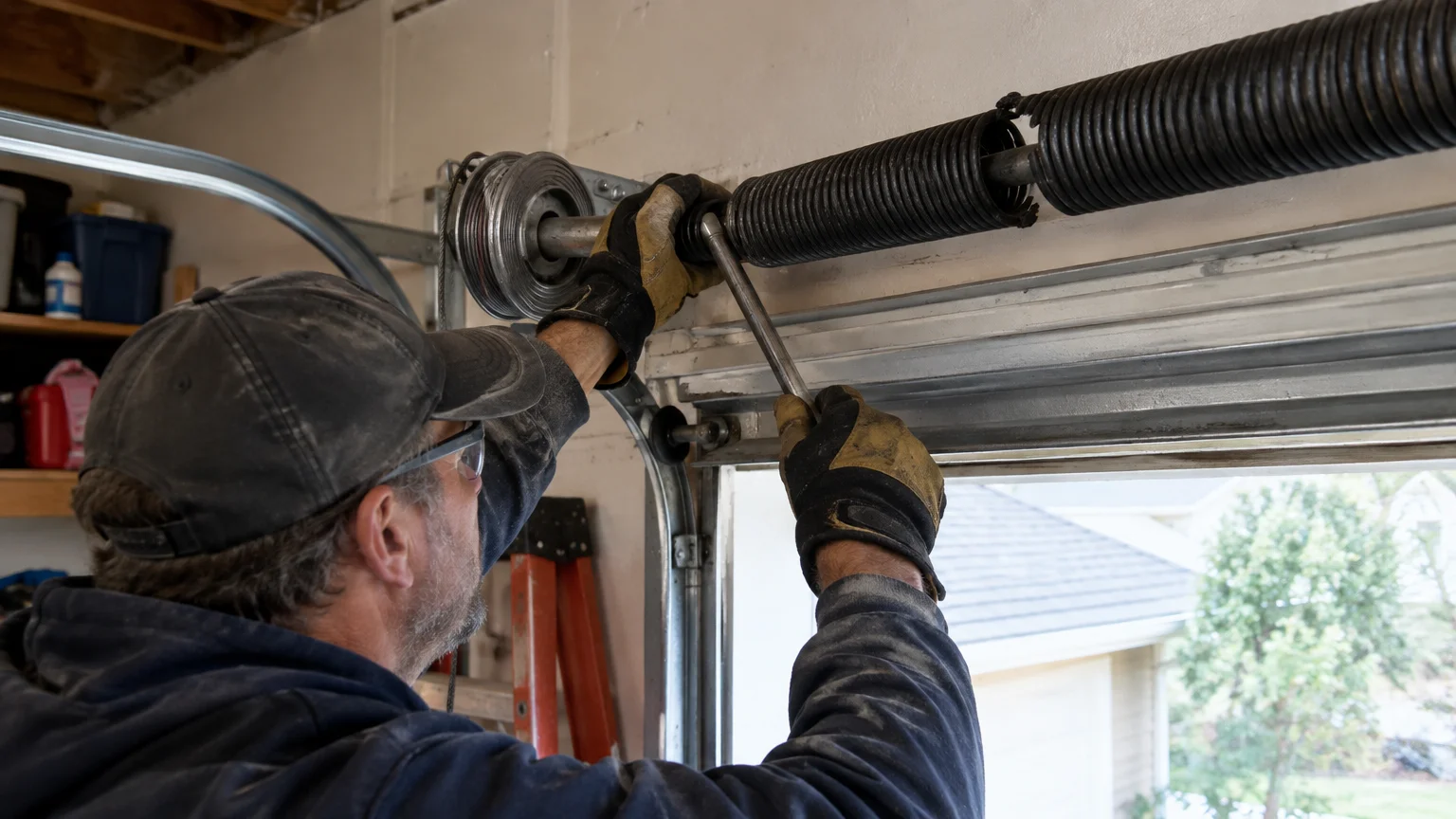
A torsion spring sits above the garage door opening. When it breaks, the coil often has a gap where it separated. The spring may still look mostly whole, so do not touch it or try to move its parts.
Extension springs usually sit along the upper sides of the horizontal tracks. A broken extension spring may hang down, split apart, or pull away from its support. Safety cables may still be in place, but they do not make a broken spring safe to handle.
Loose cables are another warning sign. Lift cables wrap around drums or run beside the door. When spring force disappears, a cable may come off its drum. It can then tangle or create another repair problem.
Differences between torsion and extension spring failures
A torsion spring stores force by twisting around a shaft. An extension spring stores force by stretching along the track. Both types help lift the door, but they sit in different places and fail in different ways.
Avoid touching either type. A spring that looks broken may still leave force in nearby parts. A trained technician can secure the door, check the cables and tracks, and decide which parts need replacement.
What types of springs do garage doors use?
Most home garage doors use torsion springs, extension springs, or a mix made for the door design. A torsion spring twists on a shaft above the door. An extension spring stretches beside a horizontal track. The right replacement depends on the door's weight, size, hardware, and setup.
How torsion springs work
A torsion spring is a tight coil mounted above the door. As the door moves, the spring stores and releases energy through the shaft and drums. Lift cables transfer that force to the lower corners of the door.
Many newer doors use one or more torsion springs. A door may have one spring or two. That number does not show whether the system is safe for a homeowner to repair. The spring can hold strong tension when the door is open or closed.
A technician checks the shaft, drums, bearings, cables, brackets, and balance during spring service. Replacing one part without checking the rest can leave another worn part ready to fail.
How extension springs work
Extension springs stretch as the door closes. They are usually placed above the horizontal tracks on both sides. Safety cables pass through many extension spring systems to help contain a broken spring.
Older doors often use extension springs, though this design can appear on newer doors too. The spring size and length must match the system. Choosing a part by appearance alone can create poor balance or too much force.
The phrase garage door spring types means more than spring shape. It also includes the length, wire size, inside diameter, winding direction, and lifting duty. A qualified professional should check those details.
Can you open a garage door with a broken spring?
A garage door may open by hand after a spring breaks, but this can be dangerous. The door may be very heavy, fall without warning, or move unevenly. The safest choice is to leave it closed and arrange a professional inspection unless a trained technician gives other instructions.
Why manual lifting can be dangerous
Springs counterbalance much of the door's weight. Without that support, a person may need to lift a heavy door with little control. The door can slip, bend tracks, pull cables loose, or fall back down.
Never stand under a door that someone is forcing open. Do not use a vehicle, rope, ladder, or homemade brace to lift or hold it. Children, guests, pets, and workers should stay away until the system is secure.
Do not keep using the opener to test the door. Repeated attempts can strain the motor and gear system. They can also worsen a cable problem or move an uneven door out of its tracks.
What to do if your vehicle is trapped inside
First, keep the door closed if it is resting safely on the floor. Check for a side door or another safe exit. Do not remove brackets, unwind springs, or force the door upward.
If the door is partly open, keep everyone clear. Do not stand underneath it or try to hold it in place. A trained garage door repair professional can decide whether the door can be secured and opened safely. Middletown Garage Door Repair serves property owners and can explain the next safe step.
Why should you avoid repairing a broken garage door spring yourself?
A broken spring repair is not a safe home project. The spring and related parts can store a large amount of force. A mistake can cause serious injury, damage the door, or leave the whole system unsafe.
Stored tension and the risk of serious injury
Stored tension means energy held inside a spring or another loaded part. When that energy releases without control, metal parts and tools can move quickly. Hands, eyes, arms, and the head may be in the path.
Spring repair also needs special tools and careful steps. The door may need to be secured, tension removed, parts replaced, and balance tested. The steps change with the spring type and door design.
The same warning applies to adjusting garage door spring tension. A small change can affect the force across the full door system. Do not wind, unwind, cut, stretch, or clamp a spring at home.
How improper repairs can damage the door system
Wrong spring work can bend the shaft, damage drums, pull cables away from their paths, or strain the opener. It can also make the door seem fixed while leaving it badly balanced. That hidden problem may cause another failure later.
A professional can check related parts during Garage Door Spring Repair. The check may include cables, rollers, hinges, tracks, brackets, bearings, and the opener connection. If a cable has also failed, Garage Door Cable Repair may be needed.
Anyone looking for garage door opening repair or garage door opener repair should remember that the opener may not be the true cause. A broken spring can make a working opener seem dead. Testing the full system helps prevent the wrong repair.
How long do garage door springs usually last?
Garage door springs do not have one set service life. Their lifespan depends on use, spring quality, door weight, weather, maintenance, and the condition of other parts. A spring that works today may still be close to failure if it shows rust, gaps, stretched coils, or uneven movement.
What affects spring lifespan
Every opening and closing cycle adds work to the spring. A busy home, rental property, shop, or business may use its door more often than a quiet home. Heavy doors and poor balance also place more demand on the springs.
Rust can weaken the metal over time. Moisture, dirt, loose hardware, damaged cables, and worn rollers can add strain. A spring may also fail sooner when the wrong part was installed or the door was changed without matching the spring system.
Regular Garage Door Maintenance can help find wear before a full failure. Maintenance cannot make a spring last forever, but it can uncover cable damage, poor balance, and unsafe hardware sooner.
Signs a spring may be nearing the end of its service life
A spring may need attention when the door becomes noisy, uneven, heavy, or slow. Rust, stretched coils, loose parts, and repeated opener problems also need a check. These signs do not prove that the spring has failed, but they should not be ignored.
A balance test should only be done when a trained professional says the door is safe to handle. Do not disconnect the opener or lift the door alone. The safest plan is to arrange an inspection when the door shows a new change.
Why are garage door springs replaced in pairs?
Springs are often replaced in pairs when both springs serve the same door. They usually have the same age and workload. Replacing one can leave uneven force across the door. The correct choice depends on the system, spring condition, and inspection.
How uneven spring tension affects door balance
A balanced door rises smoothly and stays near its position when used correctly. If one old spring works beside one new spring, they may not provide equal support. The door can sit crooked, move roughly, or place extra force on cables and the opener.
Uneven tension can also create safety problems. One side may lift first, or the door may close with more force than expected. That movement can damage tracks, rollers, hinges, and drums.
Pair replacement is not a rule for every door. Some systems use one spring, and some repairs involve one damaged part. A technician should identify the design before choosing what to replace.
When to arrange professional spring replacement
Arrange help quickly when the door will not lift, a spring has a visible gap, or a cable has come loose. Prompt service also makes sense when a door is stuck open and leaves the property exposed. Do not keep testing a failed system.
Middletown Garage Door Repair can help homeowners, business owners, and property managers understand whether Spring Repair, Garage Door Off Track Repair, or another service fits the problem. The repair plan should be explained after the system is inspected.
Frequently Asked Questions
Can a garage door opener work when the spring is broken?
The opener may hum, click, or move briefly when a spring is broken, but it may not lift the door. Continued use can strain the motor and damage other parts. Stop pressing the remote and arrange an inspection. The opener may work while the failed spring prevents normal movement.
Is a broken spring an emergency?
A broken spring needs prompt attention, especially when the door is stuck open, blocks a vehicle, or leaves a building unsecured. It may not always require immediate night service, but the door should stay unused. Keep people away until a trained professional makes the system safe.
Can a homeowner replace a garage door spring?
Homeowners should not replace garage door springs themselves. Springs store force, and the repair needs special tools, correct sizing, and safe door control. A mistake can cause serious injury or damage. A trained technician can replace the spring and check the cables, tracks, and opener.
What is the difference between spring repair and cable repair?
Spring repair addresses a failed or worn spring that helps lift the door. Cable repair addresses a lift cable that is loose, broken, tangled, or off its drum. The two parts work together, so a failure in one can affect the other. A full inspection can find both problems.
Who services garage doors near me?
A local garage door repair company that handles springs and cables can inspect a failed system. Look for trained service, clear safety guidance, and help with the specific door type. Middletown Garage Door Repair can explain the next step without asking the owner to handle spring tension.
Key takeaways
- A loud snap, visible spring gap, heavy door, or loose cable can signal failure.
- A broken spring can make a working opener seem broken.
- Torsion and extension springs use different designs, but both can be dangerous.
- Homeowners should not wind, unwind, cut, stretch, or replace springs.
- Springs are often replaced in pairs when both serve the same door.
Conclusion
A garage door spring can fail without warning, but the signs are often easy to spot. A heavy door, loud bang, visible gap, loose cable, or struggling opener should be treated as a safety issue. Stop using the door and keep people away to help prevent more damage.
The safest next step is a professional inspection. Contact us today for urgent garage door spring help from Middletown Garage Door Repair.