A garage door opener problem often comes from lost power, failed controls, blocked sensors, worn drive parts, or a door that cannot move safely. Simple checks may restore operation, but broken springs, cables, heavy doors, and damaged tracks need trained help. The goal is to find the fault without forcing the system.
Table of Contents
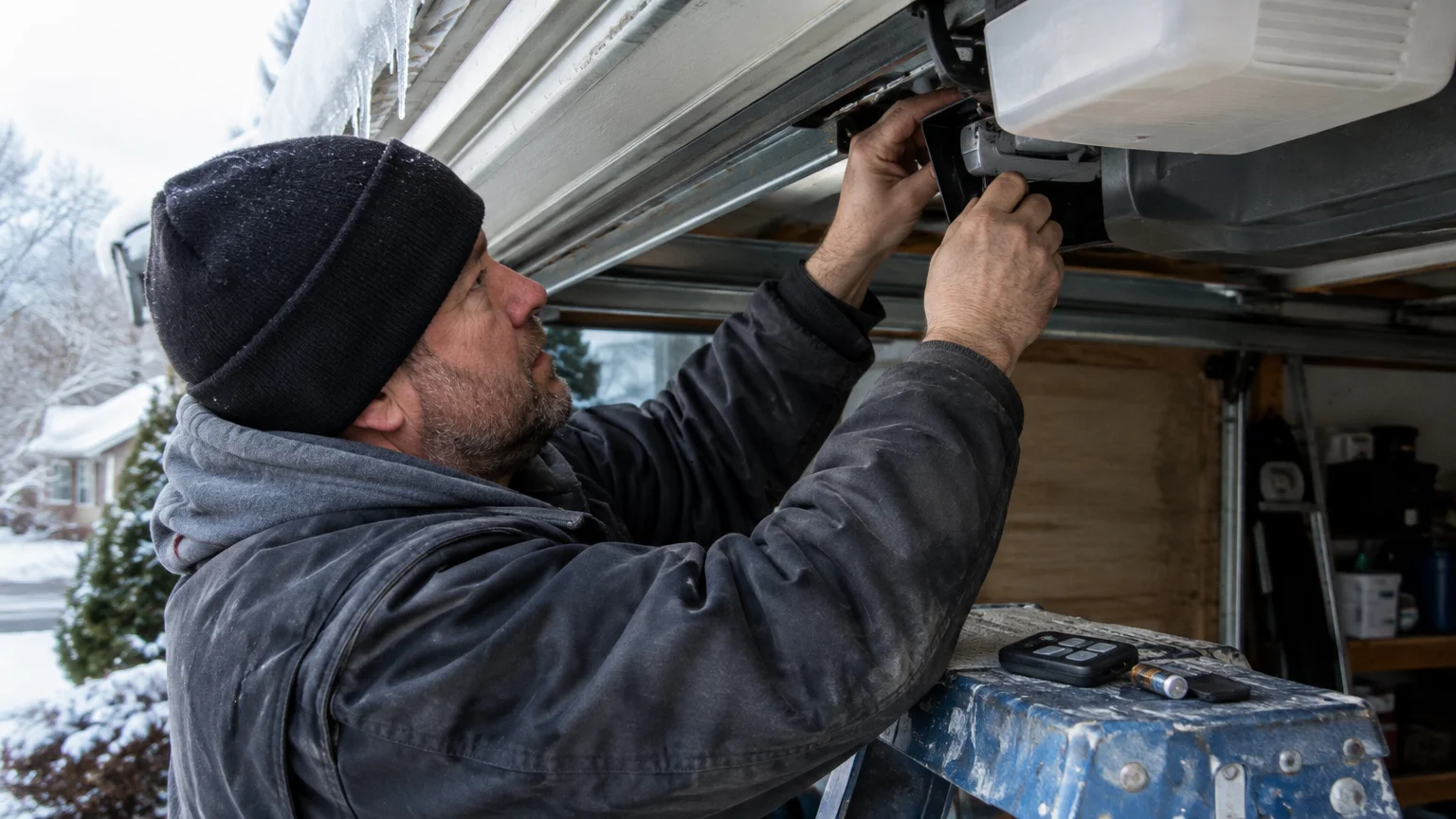
- Why is my garage door opener not working?
- Could a power or control problem be stopping the opener?
- What does it mean when the opener runs but the door does not move?
- Why does the garage door reverse, stop, or close unevenly?
- How does cold weather affect a garage door opener?
- Can resetting the opener fix the problem?
- When should you call a garage door repair professional?
- Frequently Asked Questions
Why is my garage door opener not working?
A garage door opener may stop working because it has no power. The remote may also fail, or the door itself may be stuck. A garage door opener is the motor and drive system that moves the door. First, check whether the opener responds at all.
Press the wall control once and listen. A light, click, hum, or motor sound can give useful clues. No response may point to power, wiring, a control, or a locked motor. A humming motor with no door movement may show a drive problem. It may also mean the door is too heavy.
How to tell whether the opener or the door is at fault
A door problem can look like an opener failure. The door may be off its tracks, caught on a damaged roller, or held by a broken spring. In these cases, the opener may stop to protect itself. Do not force a door that feels very heavy or hangs at an angle.
The emergency release cord can separate the door from the opener. It does not make a dangerous door safe. A homeowner may look for clear damage from the floor. Do not handle springs, lift cables, or bottom brackets. These parts can hold great force.
Safety checks before troubleshooting
Keep people, pets, and vehicles away from the door. Do not stand under a moving door. Keep hands away from hinges, rollers, and the drive rail. Check that the door is not locked and that nothing blocks its path.
Safe checks include confirming power, cleaning sensor lenses, replacing remote batteries, and checking for clear obstructions. Middletown Garage Door Repair helps property owners separate simple control faults from problems needing Garage Door Opener Repair or Garage Door Off Track Repair.
Could a power or control problem be stopping the opener?
Yes. A tripped breaker, unplugged opener, damaged wall control, weak battery, or failed receiver can stop a sound system. These faults are common because the opener depends on several controls before it will move.
Power supply, wall consoles, and circuit breakers
First, check whether the opener light works or the motor makes any sound. Check the outlet and breaker panel without opening the motor housing. A breaker that trips again may show an electrical fault. Do not keep resetting it.
The wall console may be locked or damaged. Some consoles have a vacation or lock setting that blocks remotes. If the wall button works but the remote does not, the motor may have power. The remote may need attention. If neither control works, the fault may be deeper.
Do not remove electrical covers or test live wiring. A trained repair professional can check the opener safely. They can inspect its control board, wiring, and receiver. This matters for homes and business doors. A failed control can block access or create a security concern.
Remote controls, keypads, and signal interference
Remote batteries are a simple place to start. The remote may also lose its programming after a control failure or battery change. A keypad can fail because of worn buttons, a weak battery, moisture, or a wrong code.
Large metal objects, damaged antenna wires, and some devices can affect the signal. Test the remote from different safe spots. Do not stand below the door while testing it. A universal remote must match the opener and be programmed correctly.
A smart garage door opener may show a fault in its app. An app message does not prove that the door is safe to move. The door, sensors, and drive parts still need a physical check. Middletown Garage Door Repair can help homeowners find whether the issue involves a remote, keypad, receiver, or opener.
What does it mean when the opener runs but the door does not move?
When the motor runs but the door stays still, the trolley, gear, chain, belt, or screw drive may not transfer force. The emergency release may also be disconnected. A loud hum can mean the opener is working against a stuck or very heavy door.
Disconnected trolleys, worn gears, and stripped drive components
The trolley is the moving part that links the opener rail to the door arm. If it is disconnected, the motor may run without pulling the door. A worn gear can make grinding sounds. It may also leave plastic pieces inside the opener housing. A belt can slip or break, while a chain can become loose or damaged.
These parts need more than a quick look. The right repair depends on the opener model, door weight, drive type, and mounting hardware. A belt drive garage door opener may need different parts from a chain or screw drive system.
A homeowner can look for clear separation without opening the motor unit. Do not force, pull, or adjust the drive system under power. Repairs may involve stored tension, moving parts, and alignment concerns.
Why forcing the door can cause further damage
Forcing the door can bend tracks, damage rollers, pull fasteners from the frame, or strain the opener. It can also turn a small control fault into a larger door repair. If the door is crooked, very heavy, or partly open, leave it still.
Do not pull loose cables or try to reconnect a spring. Garage Door Cable Repair and spring work need proper tools and training. The door may fall if a lifting part is disturbed. A professional can secure the door before testing the opener.
Why does the garage door reverse, stop, or close unevenly?
A door that reverses or stops may be reacting to its safety system. It may also be meeting resistance in the door. The opener should stop when it senses an unsafe condition. Dirty sensors, wrong travel settings, damaged tracks, and broken springs can cause similar signs.
Safety sensors and travel-limit settings
Safety sensors sit near the bottom of the door tracks. They send an invisible beam across the opening. If the beam is blocked, misaligned, dirty, or affected by damaged wiring, the door may refuse to close or reverse.
A homeowner can gently clean the sensor lenses. Remove objects from the beam path. Both sensor lights should show normal operation for that model. Do not bend, bypass, cover, or point the sensors away from the opening.
Travel limits tell the opener where the door should stop. If these settings change, the door may stop short, press too hard, or reverse. Setting them needs care because a wrong setting can affect garage door safety. The owner manual may explain basic programming, but damaged hardware needs service first.
Door balance, broken springs, and binding hardware
A balanced door stays close to its position when separated from the opener. A door that drops, rises, or feels very heavy has a mechanical problem. A broken garage door spring is a common cause. Rollers, hinges, tracks, and cables can also bind.
Springs, cables, and bottom brackets are dangerous parts. They hold stored force and can cause severe injury if released the wrong way. This is not safe DIY work. Do not wind springs, remove brackets, lift cables, or change spring settings.
A door that closes unevenly needs care before the opener is adjusted. Garage Door Maintenance can help reduce wear. Garage Door Off Track Repair may be needed when the door leaves its tracks. Do not use the opener until the door moves safely by hand.
How does cold weather affect a garage door opener?
Cold weather can make a door harder to move. It can stiffen rollers, seals, grease, and other parts. Moisture can freeze at the floor seal and hold the door down. The opener may stop, reverse, or sound strained even when its motor is healthy.
Frozen seals, stiff rollers, and increased door resistance
A frozen garage door seal can bond to the driveway or floor. Trying to open the door can tear the seal or strain the opener. Ice may also collect around tracks or under the door. Clear the opening before testing it again.
Cold can reduce remote battery power and make old lubricants thick. Rollers may move poorly, and a weak spring may become more noticeable. These problems can affect belt drive, chain drive, and wall mount garage door opener systems.
A homeowner can look for ice, remove loose snow, and replace a weak remote battery. Do not use open flames or pour hot water over electrical parts. Water can freeze again and create a larger problem.
Safe winter checks and when not to adjust components
The safest winter check is a visual one. Look for ice at the floor, blocked sensors, bent tracks, and loose visible hardware. Do not scrape hard against seals, pull the door upward, or operate it again and again when the motor strains.
If the door stays heavy after the ice clears, the issue may involve springs, cables, rollers, or balance. Cold weather can reveal a fault, but it does not make unsafe repairs safe. A repair professional can inspect the full system and protect the opener from more strain.
Can resetting the opener fix the problem?
A basic reset may clear a temporary control error. It cannot repair broken hardware, a failed motor, damaged wiring, or an unbalanced door. Resetting can also erase remote and travel settings, so use it with care.
What a basic reset can and cannot resolve
A reset may help after a short power loss or control glitch. The exact process changes by maker and model. Follow the product manual. Keep clear of the door while testing it.
A reset will not fix a broken spring, stripped gear, off-track door, failed sensor wire, or bent rail. It may hide the real fault for a short time. If the opener trips a breaker, smells hot, grinds, or repeats the failure, stop testing.
Reprogramming remotes, keypads, and travel settings
Remote and keypad programming is often a low-risk task when the door and opener are in good shape. The owner manual should guide the process. The learn button may sit on the motor unit. Programming may remove older remotes from memory.
Travel settings need more care. They control where the door stops and how the opener reacts to resistance. Wrong settings can cause impact, reversal, or unsafe pressure. Reprogramming should not replace an inspection of the door balance and safety sensors.
When should you call a garage door repair professional?
Call a professional when the door is stuck, heavy, crooked, noisy, off its tracks, or supported by damaged springs or cables. Prompt service also makes sense when the opener smells hot, trips power, grinds, or fails after safe checks.
Warning signs that require prompt service
The following signs should not be ignored:
- A broken or loose spring, cable, roller, track, or bottom bracket
- A door that falls, sags, binds, or will not stay in place
- A motor that hums, grinds, overheats, or trips the breaker
- Safety sensors that remain faulty after careful cleaning
- An opener that works only sometimes or leaves the door unsecured
Do not attempt torsion spring, extension spring, cable, or bottom-bracket repairs. These jobs involve stored force. They can damage the door or cause serious injury. The same caution applies to forcing an off-track door back into place.
What an opener repair or replacement visit involves
A technician first checks the door, tracks, rollers, springs, cables, sensors, controls, and opener drive. This shows whether the opener caused the problem or reacted to a door fault. The repair may involve a control, remote, sensor, gear, belt, chain, or motor.
If the opener is worn or no longer suits the door, replacement may be safer than repeated repairs. The right choice depends on door size, use, noise concerns, ceiling space, and available power. Belt drive, chain drive, and wall mount systems each suit different settings.
The final cost depends on the parts, access, damage, urgency, and system type. The final cost is confirmed on a quote before repairs begin. Middletown Garage Door Repair serves homeowners and property owners across the main Middletown area, including East Middletown and nearby communities.
Key takeaways
- A dead opener may have a power, remote, sensor, or door fault.
- A motor that runs without moving the door may have a drive problem.
- Springs, cables, and bottom brackets are not safe DIY repair parts.
- Cold weather can increase door resistance and expose weak components.
- Professional help is the safest choice when the door is stuck or unsafe; see Contact us for the next step.
Conclusion
Most opener faults leave clues. A silent unit points toward power or controls. A running motor with no movement points toward the trolley or drive. Reversing and uneven travel often point toward sensors, balance, tracks, or springs.
Safe checks can help narrow the cause. They should never involve force or hazardous parts. For urgent help, Contact us with Middletown Garage Door Repair when a garage door opener problem affects access, security, or safe use.
Frequently Asked Questions
Why is my garage door opener clicking but not opening the door?
Clicking may mean the wall control or remote is sending a signal. The motor may not be starting. It can also point to weak power, a failed relay, a locked control, or a motor fault. Check the outlet and remote battery safely. If the door is heavy or stuck, stop testing and seek professional help.
Can a garage door opener work with a broken spring?
The opener may run with a broken spring, but it should not lift the door. Springs carry much of the door’s weight. Using the opener can burn out the motor or damage the drive. A broken spring needs trained repair. Leave the opener unused until the door is safe.
Why does the garage door close and then open again?
The door may reverse because the safety sensors are dirty, blocked, or misaligned. It may also meet resistance from ice, a damaged track, worn rollers, or wrong travel settings. Clean the sensor lenses and clear the opening. Do not bypass the sensors or adjust hazardous door parts.
Is a smart garage door opener more reliable?
A smart opener adds app control, alerts, and remote monitoring. It still depends on sound door hardware, sensors, power, and an internet connection. Smart features do not prevent broken springs, off-track doors, or worn drive parts. Inspect the door when the system reports a fault.
Should a homeowner reset an opener before calling for help?
A homeowner may follow the maker’s basic reset instructions when the door is in good condition. No hazardous damage should be visible. A reset cannot repair springs, cables, tracks, gears, wiring, or a failed motor. If the opener smells hot, trips power, or strains, stop testing.
If you are not sure what you are dealing with, it is worth having someone look at it before it turns into a bigger job. Get in touch with Middletown Garage Door Repair today and we will tell you where you stand.