A wall mount garage door opener sits beside the garage door instead of hanging from the ceiling. It can help when headroom is low, storage blocks the ceiling, or the garage has a special layout. The right model must match the shaft, springs, door weight, balance, wall, and available service space.
Many homeowners first consider this style when a ceiling opener takes up needed storage space. Others have beams, sloped ceilings, high-lift tracks, or low clearance. Middletown Garage Door Repair helps property owners learn which opener style fits their door and garage safely.
Table of Contents
- What is a wall-mount garage door opener?
- When is a wall-mount opener the only practical option?
- How do you know whether your garage door is compatible?
- What are the advantages of choosing a side-mount opener?
- What are the disadvantages of wall-mount garage door openers?
- How do wall-mount openers compare with ceiling-mounted models?
- What features should you look for in a side-mount opener?
- What does installing a wall-mount garage door opener involve?
- Can you replace a ceiling-mounted opener with a wall-mount model?
- How should you choose the right wall-mount opener for your garage?
- Key takeaways
- Frequently Asked Questions
- Conclusion
What is a wall-mount garage door opener?
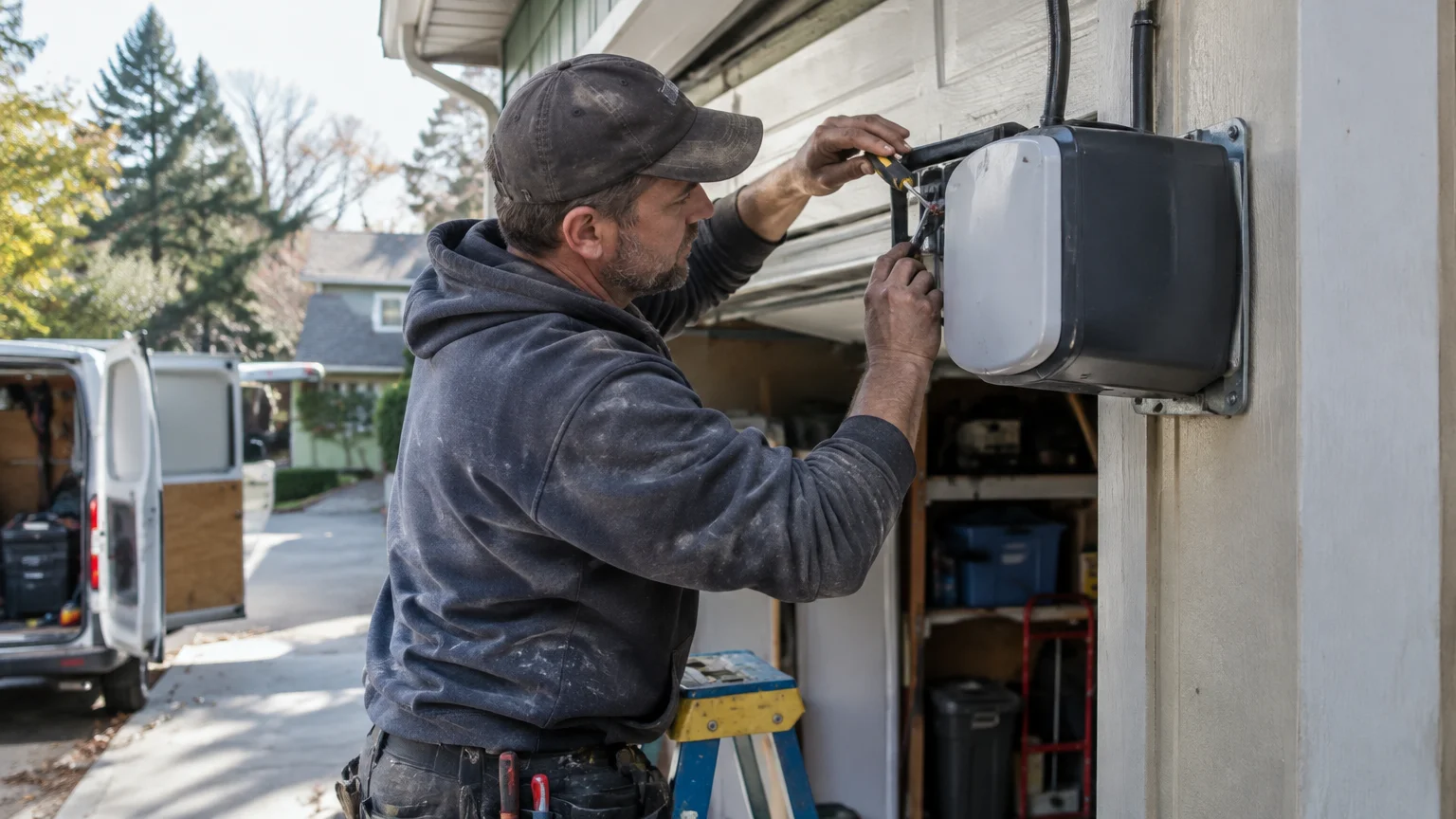
A wall-mount garage door opener is a motor fixed beside the garage door. It turns the torsion shaft, which is the metal bar above the door. The shaft works with the springs, cables, and drums to lift and lower the door. This design is also called a side-mount or jackshaft opener.
How side-mount openers operate
The motor connects to the shaft above the door. When the motor turns, the shaft turns with it. The drums and cables then move the door up or down. Unlike a ceiling model, this opener does not pull the door along a long overhead rail.
This setup needs the right torsion spring system. The door must also move smoothly by hand when the opener is disconnected. A motor cannot safely fix a door that binds, drags, or has broken cables. Those problems must be found and repaired first.
The door also needs enough shaft space for the motor connection. The wall must hold the mounting brackets firmly. There should be room for wiring, the emergency release, and later service work.
How they differ from ceiling-mounted openers
A ceiling-mounted model uses a rail, trolley, and arm. The motor often hangs near the back of the garage. A side-mount model uses wall space near the door and leaves the middle of the ceiling open.
Both types need working safety sensors and a reliable door. The best choice depends on headroom, door design, shaft space, and planned features. The name of an opener does not prove that it will fit every garage door.
When is a wall-mount opener the only practical option?
A wall-mount opener may be the most practical choice when a ceiling rail cannot fit. It can also help when a rail would block storage, lights, ducts, or beams. Some garages have a door close to the ceiling, while others have a track that follows the roof line.
Low ceilings, obstructed ceilings, and unusual layouts
A ceiling opener needs room for its motor, rail, and moving trolley. Ceiling lights, ductwork, storage racks, and beams can reduce that space. A wall-mounted unit avoids much of this conflict.
Some garages use a high-lift door. This door travels up the wall before moving along the ceiling. Other garages have sloped ceilings or tall doors. A side-mount design may work better in these spaces, but the shaft and spring layout still need a close check.
A low ceiling does not always require a wall-mount unit. Low-headroom hardware may solve some problems. A trained technician can compare that option with a side-mount opener and explain which setup is safer for the door.
Doors with limited overhead clearance
Limited headroom can create contact between the door, rail, lights, and stored items. The opener must not rub against the wall or door during normal travel. It also needs space for the motor, wiring, release cord, and service access.
A careful inspection can find tight spots before work begins. This matters in older garages and finished spaces. It also helps protect the garage door seal, which keeps out wind, water, dust, and pests along the bottom edge.
How do you know whether your garage door is compatible?
Compatibility depends on the whole door system, not only the wall space. A technician checks the torsion shaft, spring position, balance, cable condition, door size, and mounting surface. The opener maker’s instructions also set limits for each model.
Door balance, shaft design, and torsion springs
A balanced door should stay controlled when opened by hand with the motor disconnected. If it drops, rises, or feels very heavy, the spring system may need work. A garage door spring stores strong energy, so homeowners should never adjust or replace one themselves.
The shaft must extend far enough for the opener connection. The drums, cables, bearings, and end plates must also be in good shape. A bent shaft, loose bracket, or worn bearing can cause poor tracking and unsafe movement.
The spring system carries much of the door’s weight. The opener guides movement, but it should not carry a door that is too heavy or badly balanced. Repairing the door first may be safer than installing a stronger motor.
Door weight, height, and lifting requirements
Manufacturers list limits for height, weight, travel, and daily use. A door used many times each day may need a model made for frequent cycles. A wide or tall door may also need a special drive and control setup.
A professional can test the door before selecting a motor. An oversized opener cannot fix a weak spring, damaged panel, bent track, or broken cable. Middletown Garage Door Repair can help property owners match the opener to the real condition of the door.
The best garage door opener is not always the strongest model. It is the one that suits the door, wall, shaft, and way the garage is used. Choosing by motor strength alone can hide a larger repair need.
What are the advantages of choosing a side-mount opener?
The main benefit is more usable ceiling space. A side-mount opener can also provide useful safety and control features. These benefits matter most when the garage has low headroom or a special layout.
Clearer ceiling space and improved access
Without a long rail across the ceiling, the center of the garage can hold more storage or lighting. The ceiling may look less crowded. It may also be easier to move tall items into the garage.
The side position can make the motor easier to reach during service. Still, the unit should stay clear of vehicles, tools, water, and stored items. A weak, damp, or blocked wall may not be a good mounting surface.
More open ceiling space can also help property owners use overhead storage. The stored items must stay away from the door’s moving parts. Boxes, ladders, and racks should never block the track, sensors, motor, or emergency release.
Security, lighting, and smart-home benefits
Many modern openers offer automatic locking, motion lights, battery backup, and app control. Some can send alerts when the door opens or closes. These tools can help owners check the garage while away.
Smart controls still need safe setup. The home network should use a strong password and current security settings. Remote access does not replace checks of the door, cables, springs, rollers, and safety sensors.
A battery backup can help during a power loss, but it does not repair a damaged door. Automatic locks also need correct alignment. If the door is crooked or does not close fully, the lock may not work as intended.
What are the disadvantages of wall-mount garage door openers?
A wall-mount garage door opener needs a compatible door and a strong place to mount it. It may not fit every shaft, spring layout, or wall. It may also need more careful alignment than a simple ceiling-mounted replacement.
Installation limitations and alignment requirements
The motor must sit square with the shaft. The mounting brackets must hold firm during repeated starts and stops. Small alignment errors may cause noise, wear, or uneven movement.
The opener also needs room for the release system and wiring. The wall may contain pipes, electrical wires, or finished surfaces. A technician should check the area before drilling or removing old hardware.
A wall-mounted unit can transfer sound through the wall. This may be more noticeable when the garage shares a wall with a room. Good alignment and a sound door can help, but every installation has different results.
Maintenance concerns and operating noise
A side-mount unit does not remove the need for door care. Cables, drums, rollers, hinges, bearings, and springs still need attention. Rust, dirt, loose fasteners, and poor balance can shorten opener life.
Some owners notice motor or gear noise because the unit sits near the wall. Noise can also point to a door problem instead of a motor problem. Homeowners can clean visible dirt and check for loose objects, but spring and cable work needs trained help.
Do not spray unknown products on springs, tracks, or electrical parts. Do not remove covers or reach near moving gears. Use the owner’s care instructions and stop using the opener if the door shakes, binds, or drops.
How do wall-mount openers compare with ceiling-mounted models?
Both styles can operate a properly balanced door. The main difference is where the motor sits and how it transfers force. The garage design should guide the choice instead of one feature or brand name.
Comparing drive systems and mounting locations
A ceiling model uses a rail and trolley. It often works well in a standard garage with open headroom. A wall-mount unit turns the shaft directly and leaves the center ceiling free.
Belt drive garage door opener systems are known for smooth operation in many ceiling-mounted designs. A side-mount opener may also run quietly, but sound depends on the motor, shaft, wall, and door condition. The full system matters more than the label.
Ceiling models can be easier to fit when the garage has a normal layout. Wall-mount models may be better when a rail would hit a beam or reduce storage space. Both types need correct wiring, safety sensors, and a door that moves freely.
Choosing based on door use and garage design
A family garage with normal headroom may have several suitable choices. A business, rental property, or busy garage may need a unit made for more daily cycles. A professional can review how often the door operates and how the building is arranged.
The choice should also include power-loss access, smart controls, lighting, locking, and future repairs. Garage Door Opener Repair may be needed when an older unit has damaged wires, worn gears, or a failing control board.
Property owners should also think about service access. A unit hidden behind shelving may be hard to inspect later. A clean work area can make future testing and repair safer.
What features should you look for in a side-mount opener?
The right features depend on the door, household, and access needs. Safety features should come first. Convenience features matter after the motor, shaft, wall, door balance, and controls are properly matched.
Battery backup, automatic locking, and safety sensors
Battery backup can help the door work during a power outage. An automatic lock can hold the door closed when the opener is idle. Safety sensors use an invisible beam near the floor to detect an object in the door’s path.
Sensors must face each other and stay clear. A flashing light, reverse problem, or door that closes only while a button is held may show a fault. Never bypass the safety system.
Garage door safety also depends on the door itself. Children and pets should stay away from moving panels, cables, and the space under the door. The emergency release should be easy to reach but protected from accidental use.
Remotes, keypads, Wi-Fi, and smart controls
A remote lets a driver open the door from a vehicle. A wireless keypad can give family members or workers entry without a remote. Wi-Fi controls may allow alerts, schedules, and remote status checks.
Before choosing smart features, check whether the opener works with the home’s network and preferred platform. Keep old remotes secure when users move out or a property changes hands. A garage door opener universal remote may work with some systems but not all.
Change access codes when needed. Keep the opener app updated. If the app shows the door open for a long time, check the garage in person when it is safe to do so.
What does installing a wall-mount garage door opener involve?
Installing a wall-mount garage door opener includes checking the door, securing the motor, connecting controls, and testing safety functions. It is more than attaching a motor to a wall. The door and spring system must be ready before the opener is fitted.
Preparing the door and mounting surface
A technician checks balance, travel, rollers, hinges, cables, drums, shaft space, and spring condition. The mounting surface must support the unit without movement. Any door fault should be fixed before the new motor carries a load.
Homeowners can safely clear stored items, remove loose objects near the door, and keep children and pets away during work. They should not loosen spring hardware, remove lift cables, or change brackets that carry door weight.
The wall should also be checked for hidden wiring and pipes. Finished walls may need added support. The motor must have space for service, ventilation, wiring, and the emergency release.
Connecting controls, sensors, and the emergency release
The work includes the wall control, safety sensors, power connection, emergency release, and remote devices. The technician then tests opening, closing, reversing, locking, and manual release functions.
Work on torsion springs, extension springs, lift cables under tension, and bottom brackets can cause severe injury. These parts should be handled by someone with the right tools and training. Garage Door Installation may be suitable when the opener change is part of a larger door project.
The final test should include the door’s travel and balance. It should also check that the sensor reverses the door when the beam is blocked. A new motor should never be treated as ready until the complete door system works safely.
Can you replace a ceiling-mounted opener with a wall-mount model?
A ceiling-mounted opener can sometimes be replaced with a wall-mount model, but the change is not automatic. The door must have a suitable shaft and torsion setup. The wall must also provide enough strength and space for the equipment.
Signs the existing setup can be converted
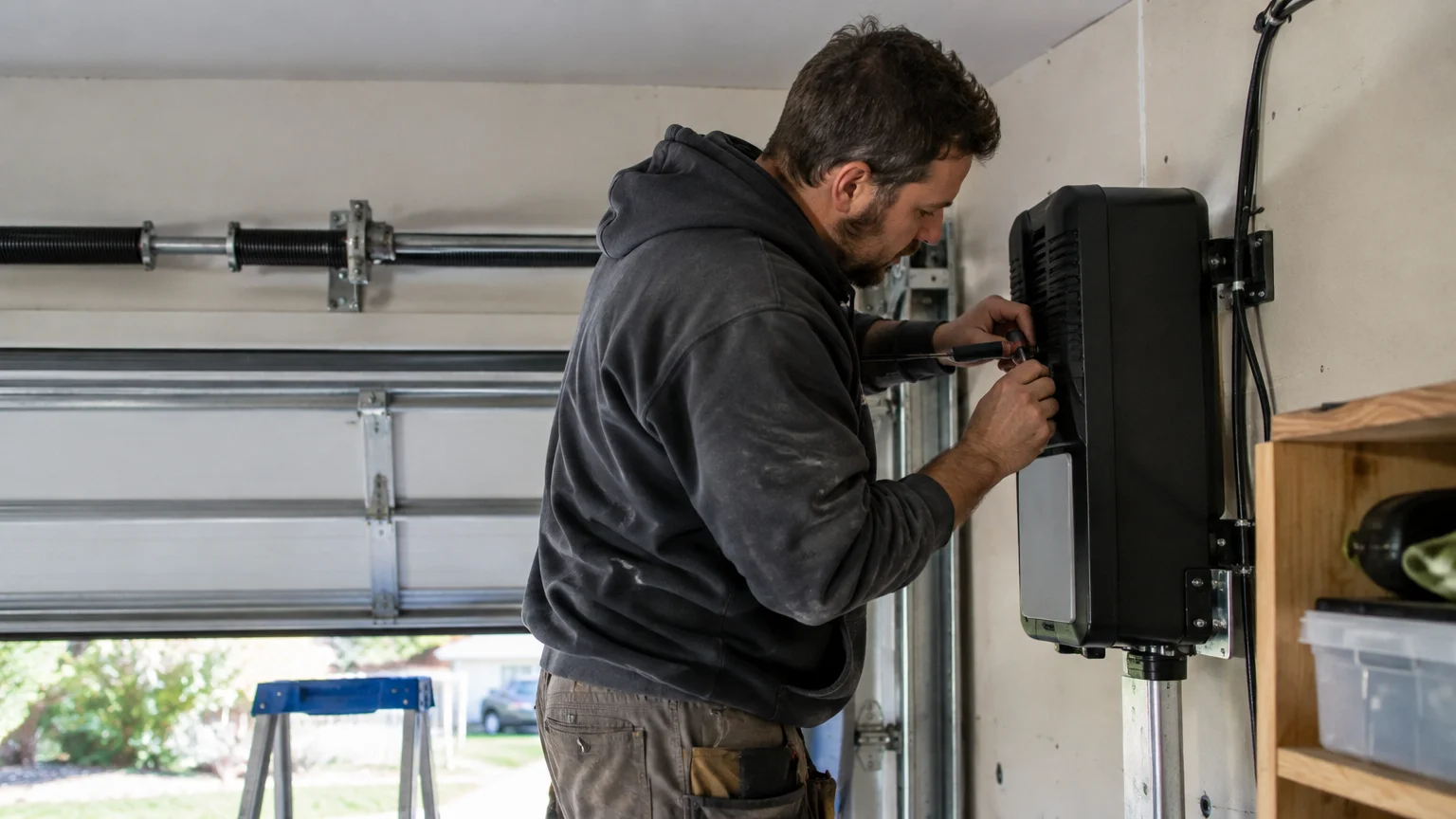
A conversion may work when the door uses a compatible shaft and the spring system is in good condition. The opener must fit beside the door. There must also be room for the motor, release cord, wiring, controls, and service access.
The old rail and hanging brackets may need removal. Holes, wires, or ceiling storage may need attention after the old system comes down. The new unit should be selected before the old equipment is removed.
The conversion may not suit a door with a different spring design. It may also fail when the shaft is too short, the wall is weak, or the door is badly balanced. A check before removal can prevent wasted work and unsafe changes.
Why spring and door repairs may be needed first
A wall-mount motor relies on the door’s shaft and spring system. A weak spring, damaged cable, bent track, or poor balance can place extra stress on the motor. Garage Door Off Track Repair or Garage Door Cable Repair may be needed before conversion.
Homeowners should not attempt spring adjustments or cable replacement. Stored force can release without warning. A trained professional can make the door safe before checking whether the new opener is suitable.
A door that is off track should not be forced with the opener. The motor may bend parts or pull the cables loose. Stop using the system until the door is checked.
How should you choose the right wall-mount opener for your garage?
Choose the opener after checking the door, shaft, wall, controls, and daily use. A good match should move the door smoothly without forcing a weak or damaged system. The safest choice is based on compatibility first and features second.
A practical compatibility and feature checklist
A homeowner can gather useful information without touching hazardous hardware:
- Note the door type, height, width, and general condition.
- Check whether beams, storage, or low headroom affect the ceiling.
- Look for a clear wall area beside the door.
- List needed features such as battery backup, lighting, keypad, or Wi-Fi.
- Record symptoms such as grinding, stopping, reversing, or slow movement.
- Keep the opener model and door papers for the technician.
These notes help explain the problem. They do not replace a balance test or inspection of springs, cables, brackets, tracks, and bearings.
Also note whether the garage shares a wall with a living area. Motor sound can matter in that layout. Think about how the door is used, who needs access, and whether the opener must work during a power loss.
When to have a garage door professional assess the installation
A professional check is wise when the door is heavy, uneven, noisy, stuck, off track, or hard to lift. It is also needed before changing spring hardware or choosing a side-mount unit for an unusual layout.
Middletown Garage Door Repair serves property owners across the main Middletown area, including East Middletown and Webb Heights. The team also helps nearby communities such as Otisville, Bloomingburg, Washingtonville, and Warwick with opener guidance and repair support.
If a broken opener blocks access, leaves the door open, or creates a security concern, stop forcing the system. Keep people away from the door until the problem is checked. This simple step can help prevent more damage.
Key takeaways
- A wall-mount garage door opener sits beside the door and turns its shaft.
- It can suit low ceilings, blocked overhead space, and unusual garage layouts.
- The door needs the right spring, shaft, balance, and mounting conditions.
- Homeowners can clear the work area and check visible problems, but not springs or cables.
- Battery backup, sensors, lighting, and smart controls should follow safety and fit checks.
Frequently Asked Questions
Is a wall-mount garage door opener better than a ceiling model?
Neither style is best for every garage. A wall-mount garage door opener can save ceiling space and suit tight layouts. A ceiling model may be simpler for a standard garage with open headroom. The right choice depends on the shaft, spring system, wall strength, space, and daily use.
A ceiling model may also be a good choice when the rail has plenty of room. A side-mount model may be better when storage, beams, or lights block that area. A door inspection helps separate a layout problem from a repair problem.
Can any garage door use a side-mount opener?
No. The door needs a compatible torsion shaft and spring arrangement. It must also be balanced and move freely before the motor is connected. Door size, shaft space, wall strength, and maker limits all matter.
A door with extension springs or a damaged shaft may need another solution. The motor should not be selected only by looking at the open wall space. A professional should inspect the full system first.
Are wall-mount openers quieter?
They can be quiet, but sound depends on the whole door system. Rollers, hinges, bearings, springs, the mounting wall, and the motor all affect noise. A grinding or shaking sound may show a repair need.
A belt drive can sound smooth, but no drive type can hide a bent track or bad bearing. Homeowners can clean visible parts and remove loose items. Spring and cable work requires trained help.
Can a homeowner install one safely?
Some preparation is safe, such as clearing the garage and reading product information. The actual fitting can involve shaft connections, brackets, wiring, sensors, and strong door forces.
Homeowners should not adjust springs, remove cables, or work on bottom brackets. These parts can cause severe injury when handled incorrectly. A trained installer can check the door and mount the opener with the right tools.
What should someone do when the opener stops working?
Check whether the opener has power, whether the remote battery works, and whether anything blocks the safety sensors. Do not force the door or bypass the sensors. Look for a loose object, but do not reach into moving parts.
If the door is heavy, stuck, crooked, or noisy, stop using it. Arrange Garage Door Opener Repair when the problem does not clear with simple checks. A damaged spring, cable, track, or motor may need attention before the door can safely operate.
Conclusion
A wall-mount garage door opener can solve problems that make a ceiling-mounted system hard to use. It can clear overhead space, support smart controls, and fit certain door layouts. Still, the door, spring system, shaft, wall, and safety controls must all match.
For homeowners and business owners in Middletown, the safest choice starts with an inspection instead of a guess. Middletown Garage Door Repair can help identify opener faults, door problems, and installation limits. Contact us today when urgent opener trouble affects access or security.